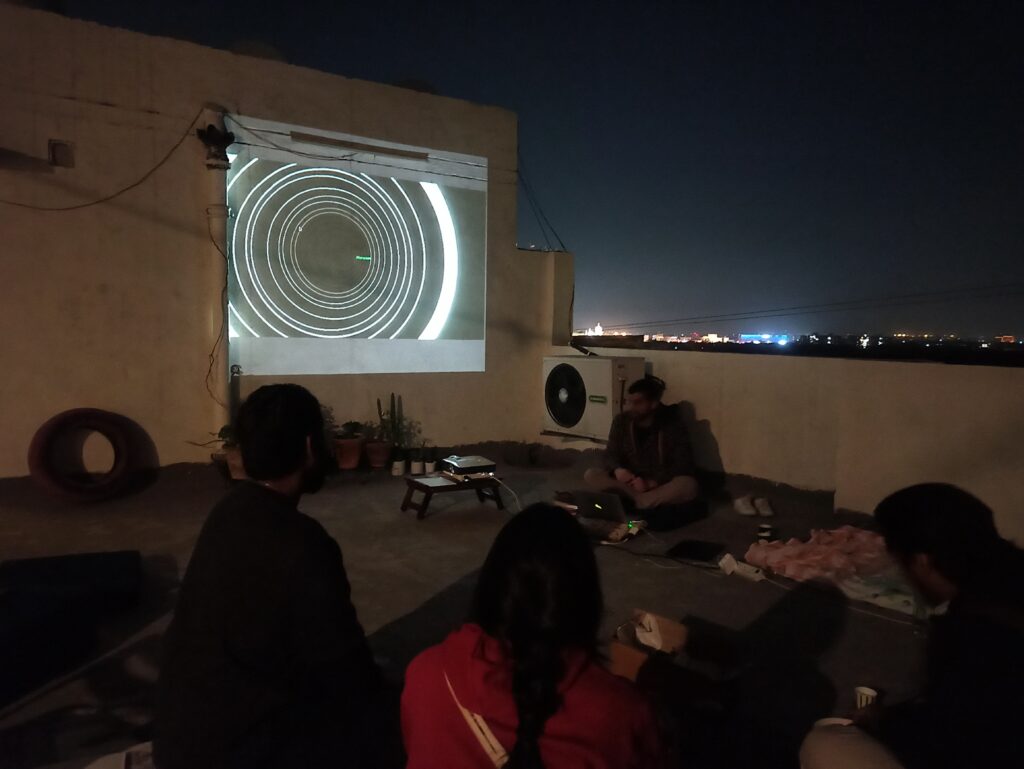
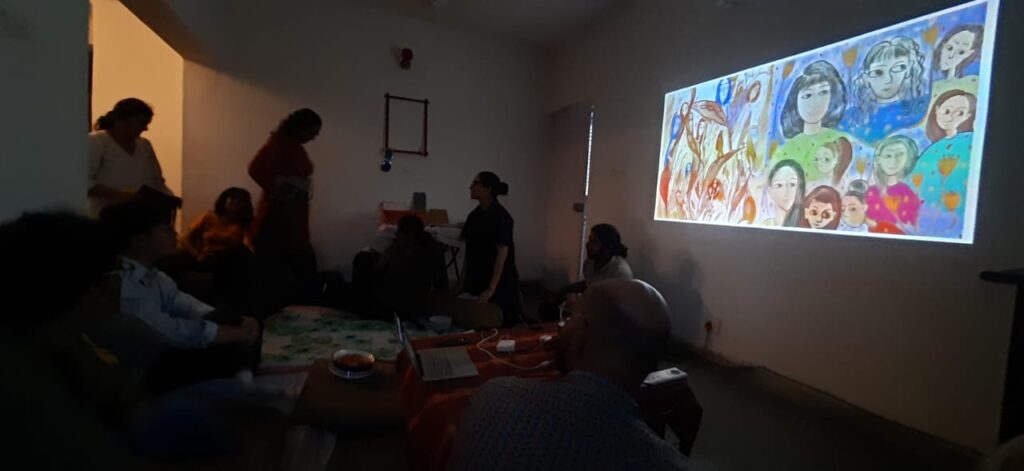
A space for artists’ gatherings in Vasantkunj, New Delhi, India since 2019, to organise and host artistic collaborations– students’ meet-ups, listening nights, sound jams, pop-up shows, gatherings, artists’ talks and other modes of coming together for cross-pollination and to lubricate conversations.
Over 30 such sessions have been catalysed for people to come together from various fields, activating the neighbourhood as well.
The space serves as a ground for birthing seed-balls of relationships and networks that are carried, sown, thrown, trespassed to withstand the fenced structures of individualised expansion.
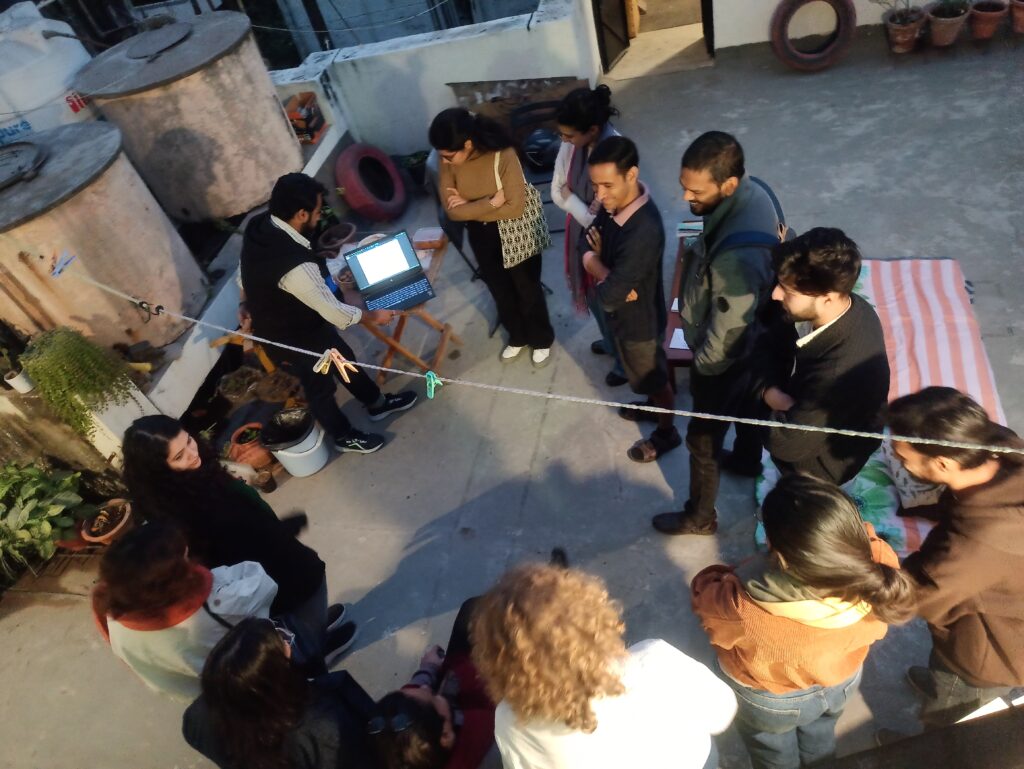
Another initiative that I started in 2023 while teaching at the MFA programme at Shiv Nadar University in Delhi, was peer+students’ meet-ups, where students and recent pass-outs of BFA, MFA, design, art research and creative fields in Delhi NCR came together at terrace/6464 to introduce their interests, practices and ask questions of the gaps in art education systems in India. We have done 3 such meet-ups till now.
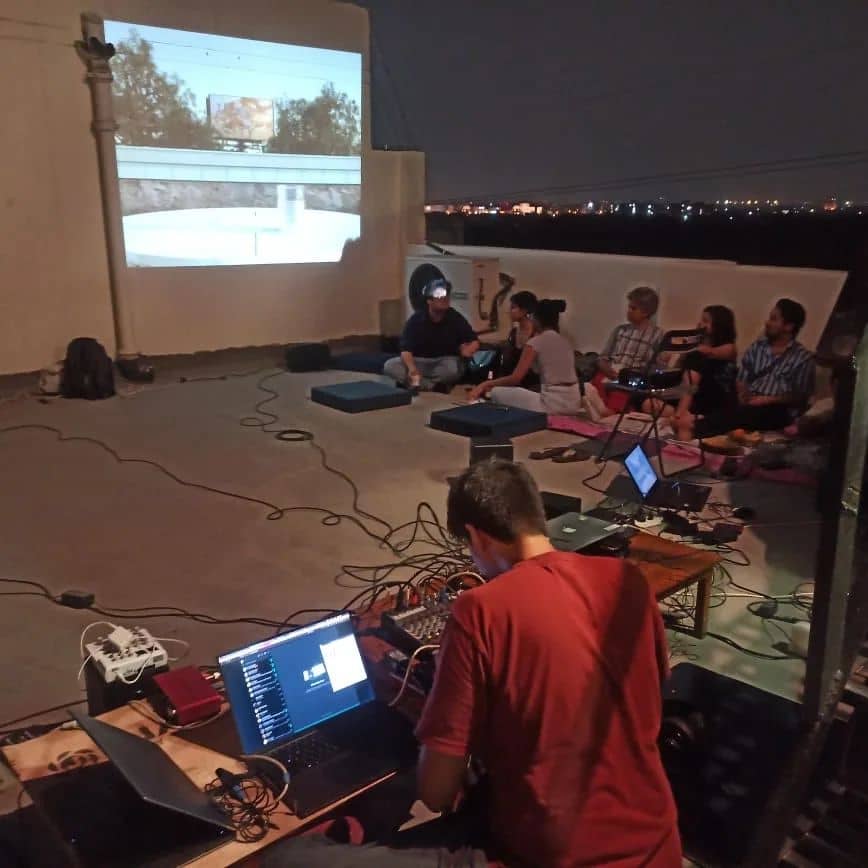
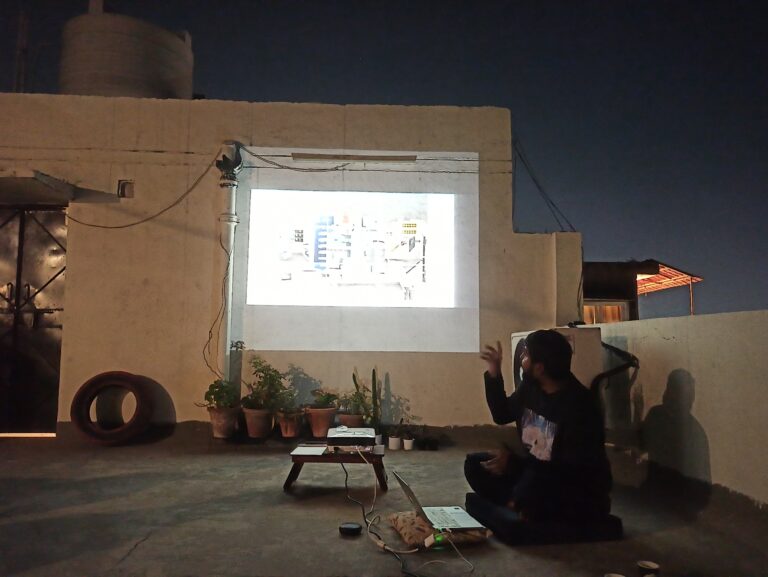
Sound Jam at the Terrace/6464 with Crispy Minds associative and friends, 2023
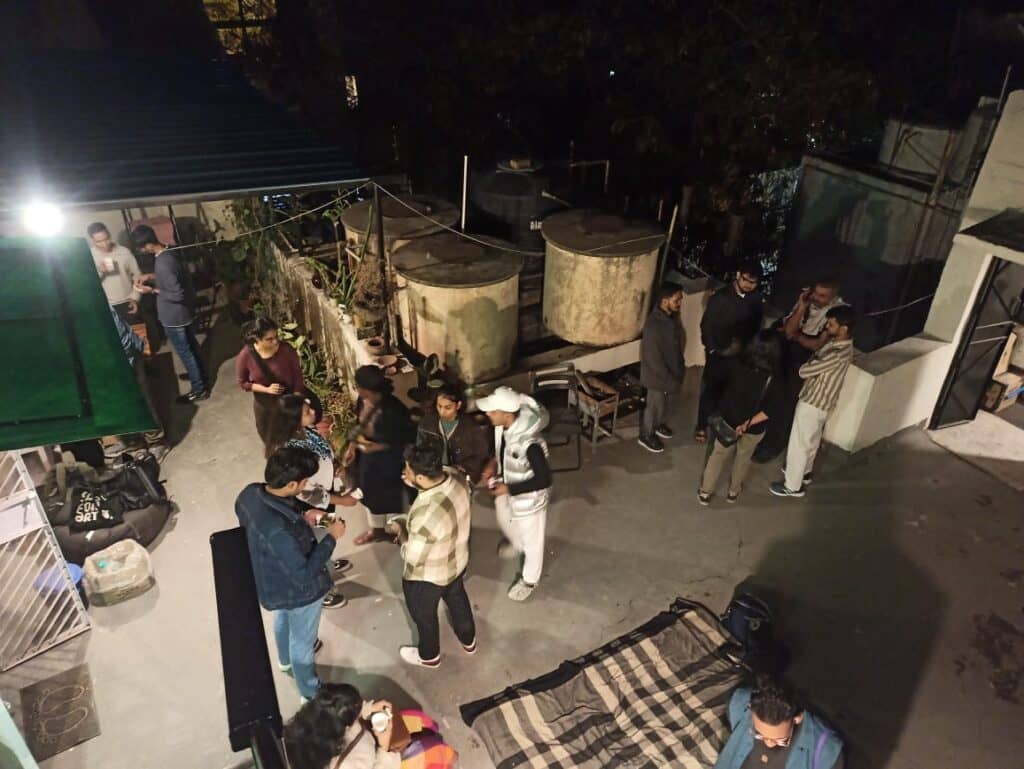
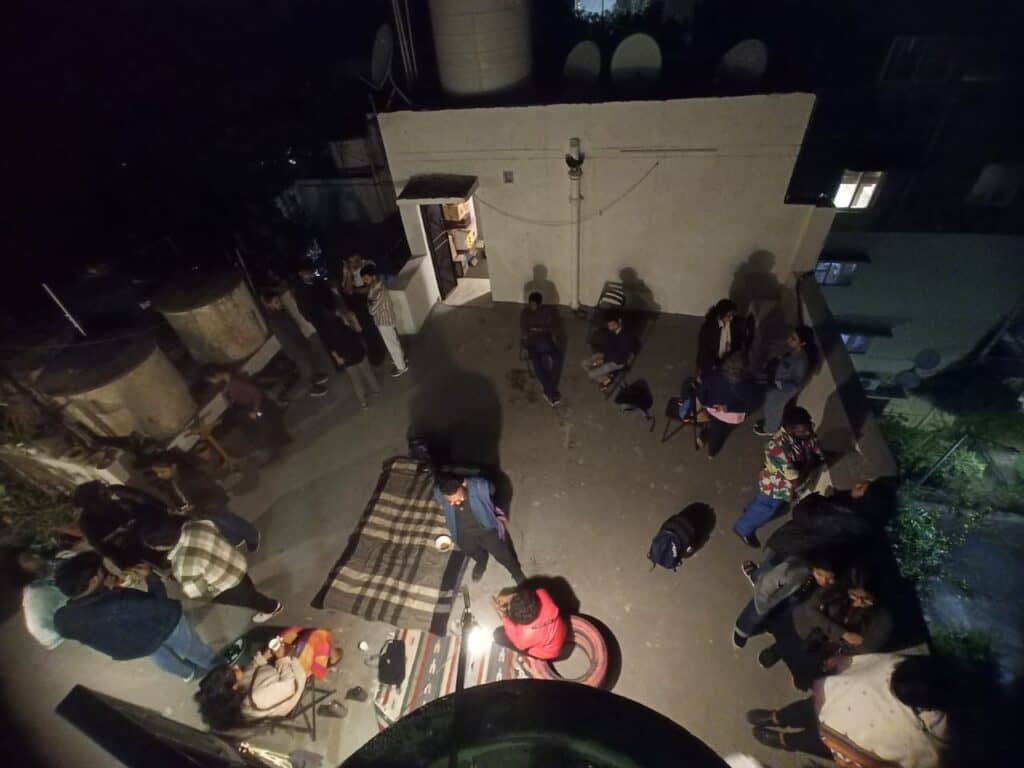
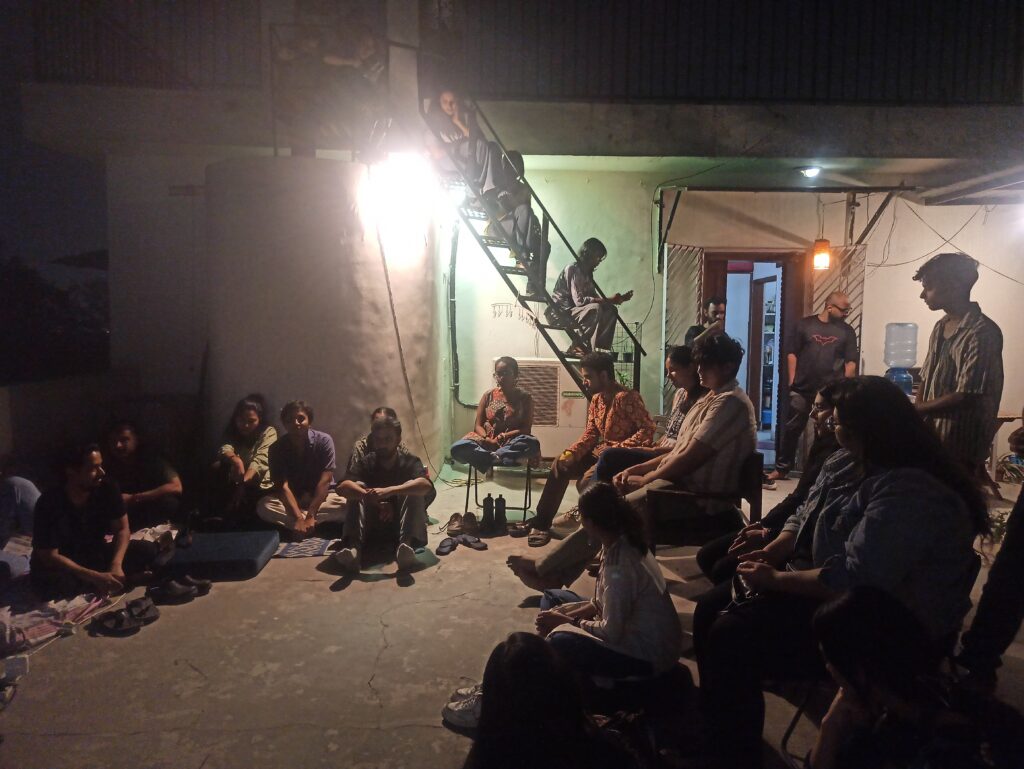
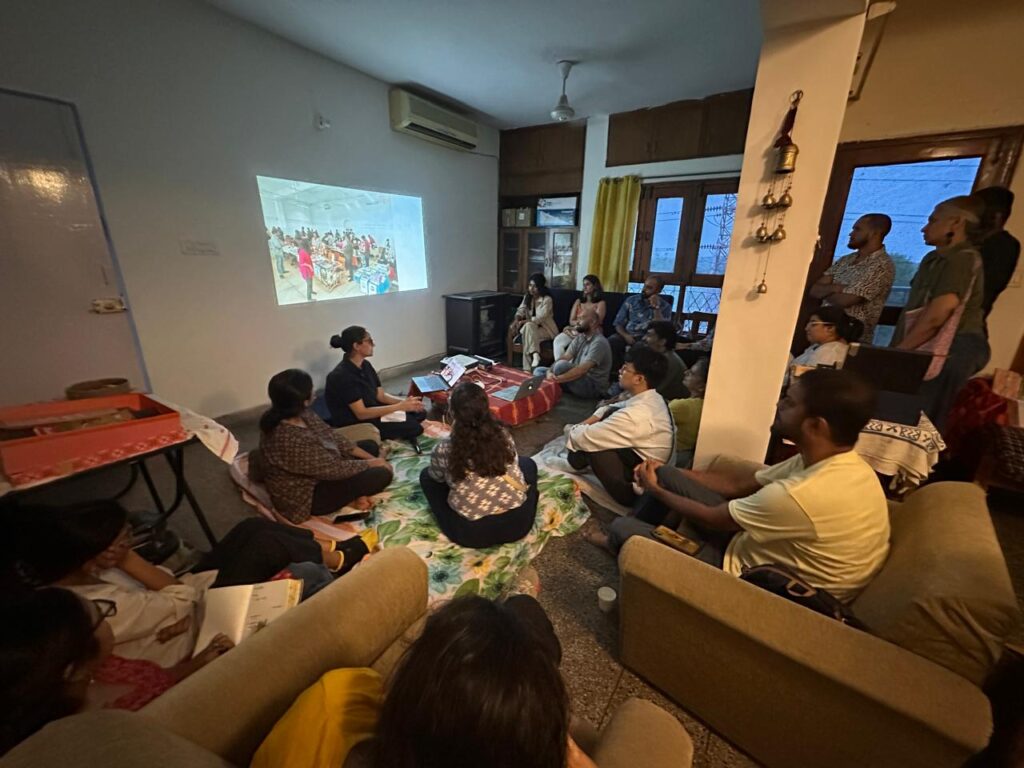
Peer and students’ meet-up 2024 - Delhi NCR. Students and peers from Shiv Nadar University (SNU), Ambedkar University Delhi, College of Art, Jamia Milia Islamia and Jawaharlal Nehru University gathered at Terrace/6464, this was organised as part of my course at SNU- Politics of the Popular, to exchange thoughts and ongoing questions on arts practice within educational institutions.
Peer and students’ meet-up 2024
Peer and students’ meet-up 2025
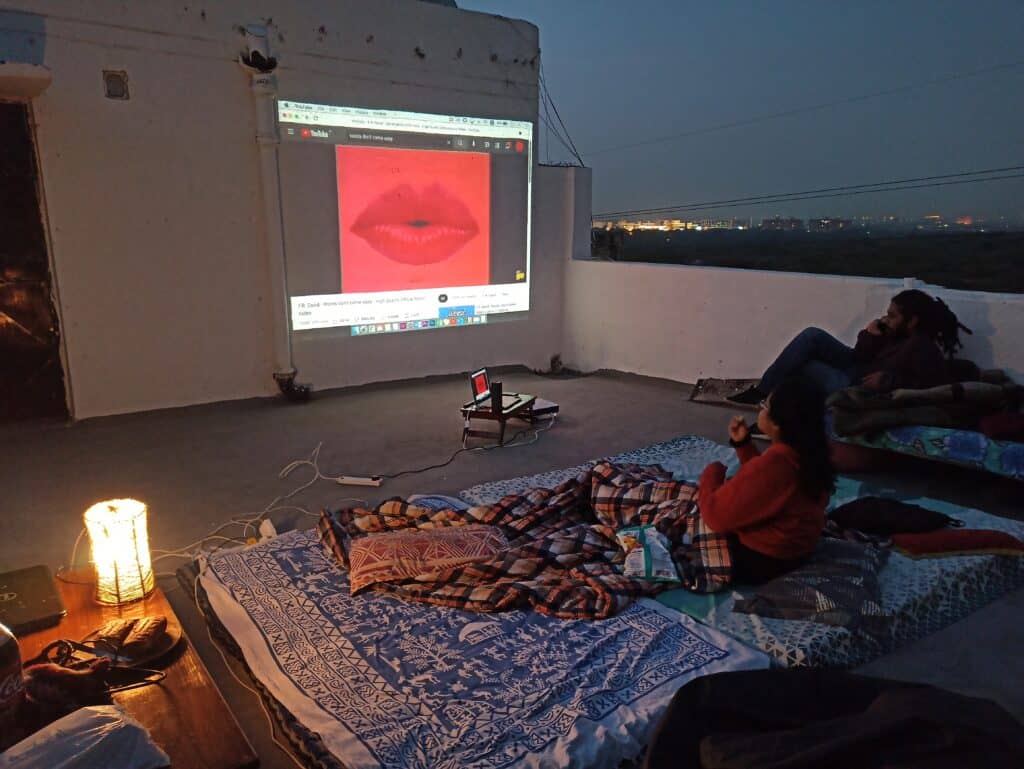
3/ first draft gathering: prompt- to bring a movie clip
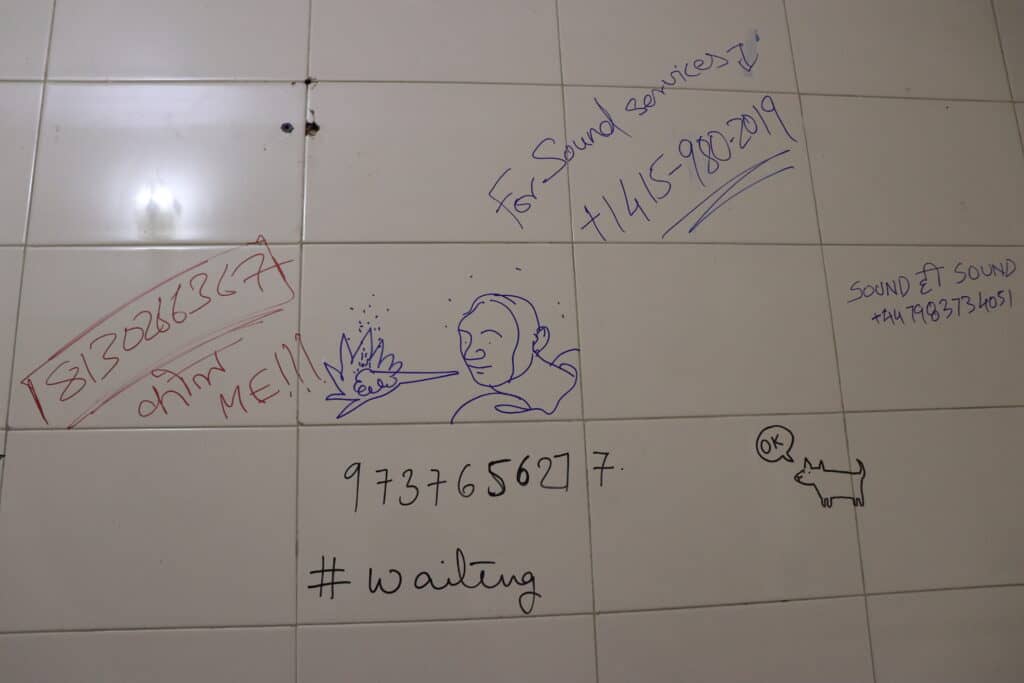
-out-of-line- night - audience was invited to doodle/write on the walls of the washroom leaving their own/others contact numbers anonymously, simulating a similar practice seen in public toilets in India. 2019
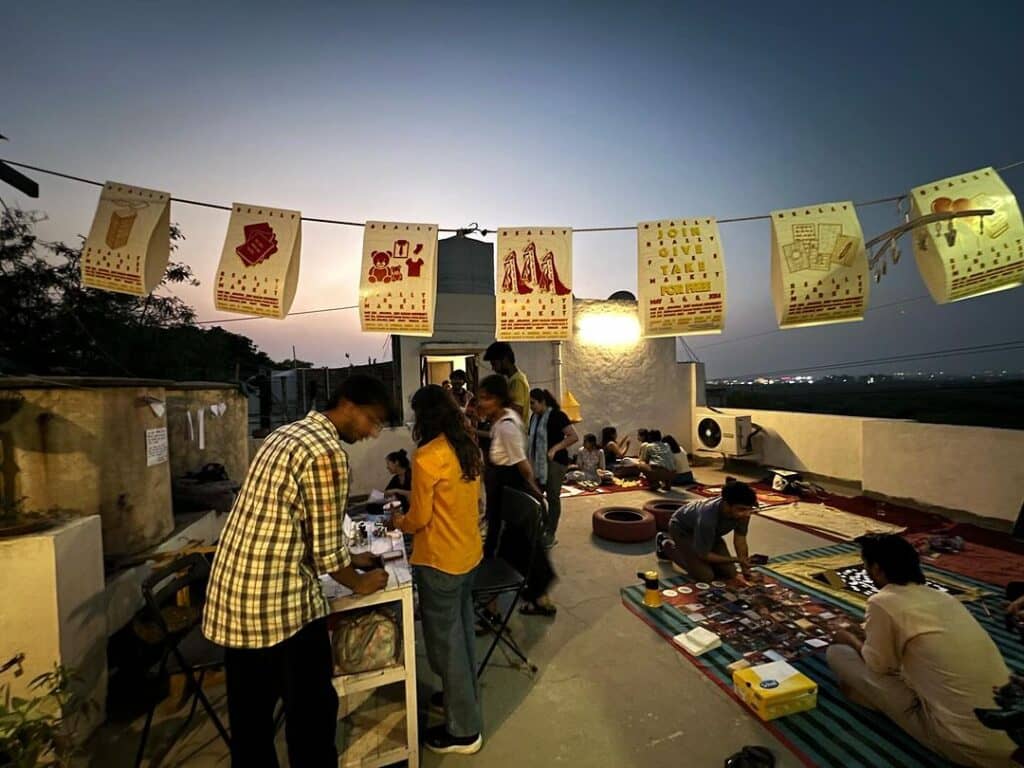
Really Really Free Market with Aletheia Hyun-Jin Shin (South Korea) and Studio A68 (Delhi) at the terrace, 2024
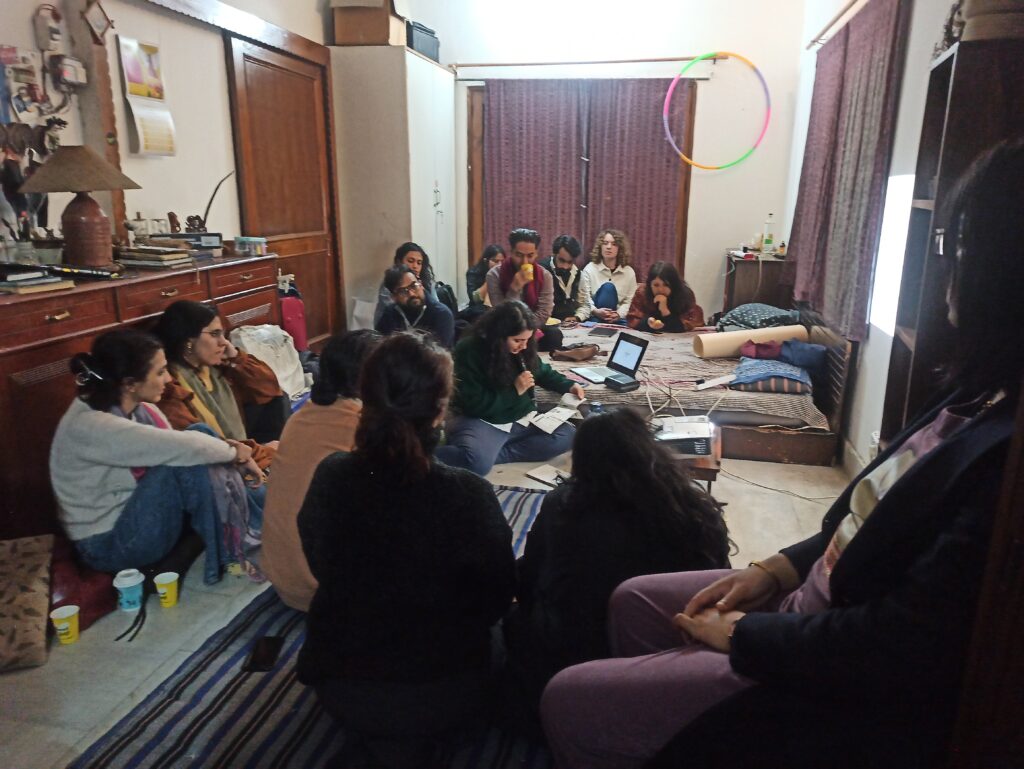
Peer Pollinations at terrace/6464 is a platform in Delhi where peers, engaged in creative practice+research in the arts, can come together to share practice and ideas in the framework of an informal display along with presentation of previous/ongoing/future works. It is created in order to have a shared space for feedback, conversations and constructive critique amongst peers, and to engage with ongoing practices and research happening in and around the field of visual arts in India. There have been 3 sessions till now.
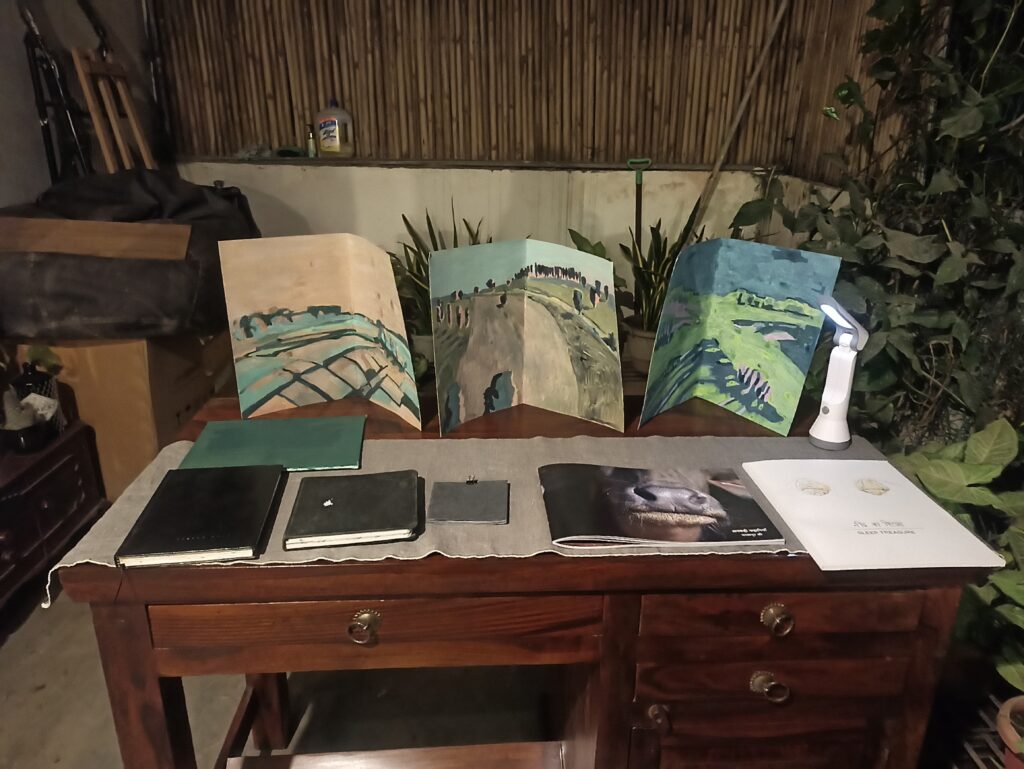
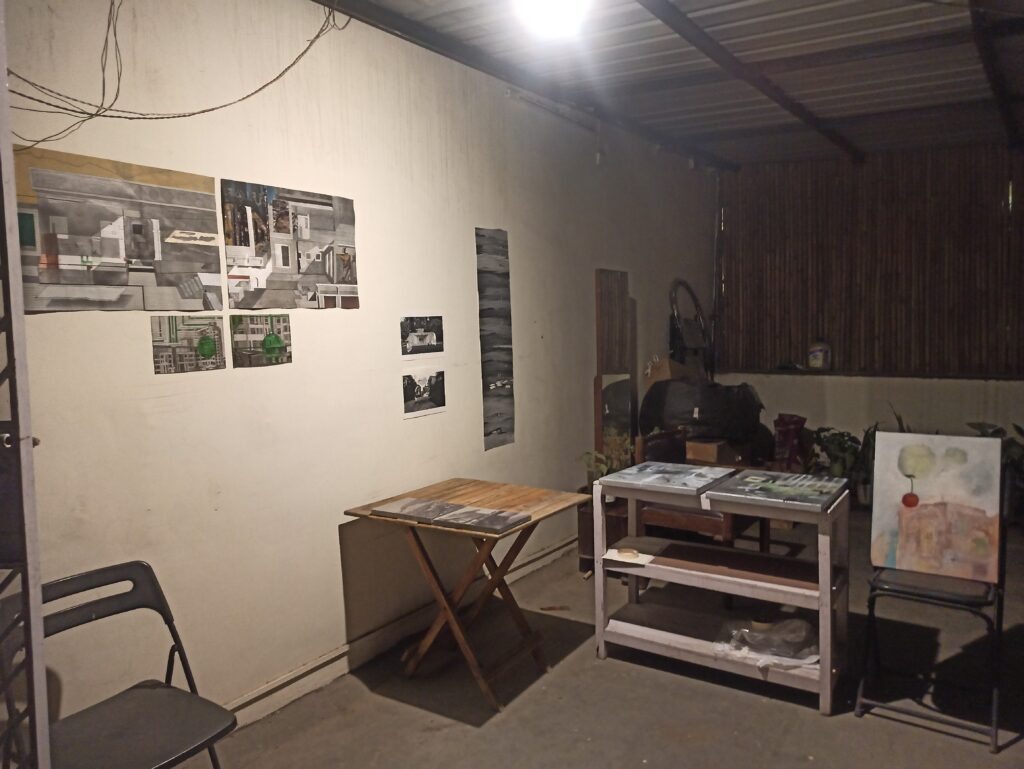
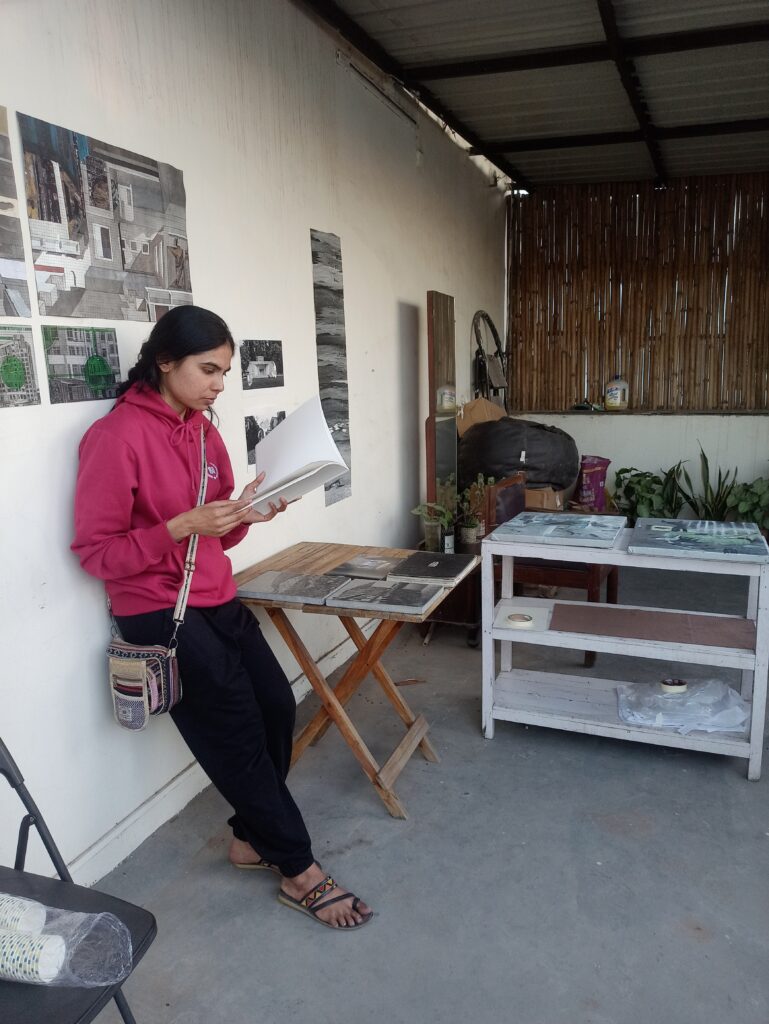
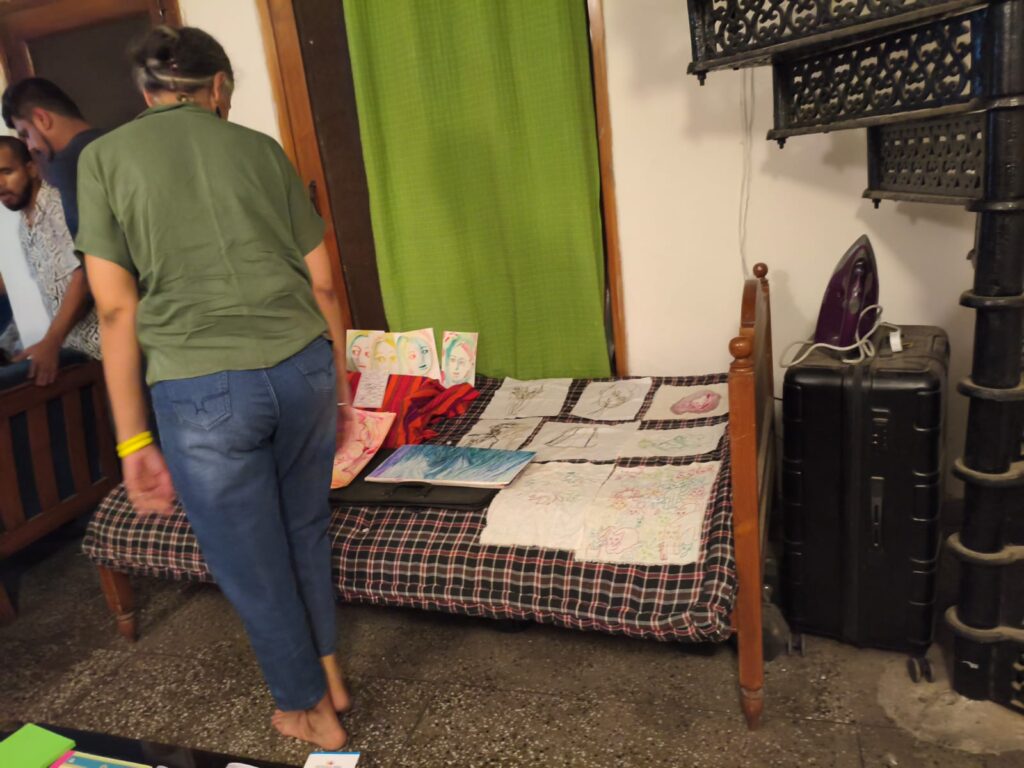
In the first Peer Pollinations, the artists- Arindam Manna, Pavni Anand and Maithili Bavkar- presented their works, they brought their artist books, sketchbook and original works (painting and prints) that were displayed in the space and were also passed around the people while the discussions were happening.
Each artist discuss about the works, Arindam laid his paintings and ongoing sketches onto the floor, tables and bed; Maithili displayed her prints on the walls and also held a reading of her artist’s book as a performative element during the presentation; Pavni took us through her research into artists’ associations and networks from the standpoint of working at Goethe-Institut, instead of showing previous work she wanted to get an understanding and discuss around her interest and what directions she could take.
In the next 2 sessions, artists experimented with the format of presentation itself, by presenting their practice as a lecture performance (Soumya Yadav), bringing maquettes of sculptures (Talhaa Wahid) or confronting the inability to practice by turning life-experiences into a dream-sequence or story-telling (Abhinav Yagnik), or talking openly about artists as workers in various institutions and how the backstage, logistical, managerial work also seeps into and can be brought into focus while thinking about and sharing ones practice (Shivangi Singh).
Peer Pollinations #1
Informal display of works by Arindam Manna, Pavni Anand and Maithili Bavkar at terrace/6464; conversations with the peers while showing works, Maithili reading from her artist book.
Peer Pollinations #2: Presentations and informal display by
Sneha Lakhotia, Abhinav Yagnik, Kapil Jangid at Terrace/6464
Peer Pollinations #3
Presentation, lecture performance and Informal display of works by Shivangi Singh, Soumya Yadav and Talhaa Wahid at terrace/6464 (Indoors)